
*In case you missed it:
The Argives
The Trojans
The Immortals*
These are the characters that do not belong to either side and, for the most part, are adversely affected by the Trojan War.
HUMAN
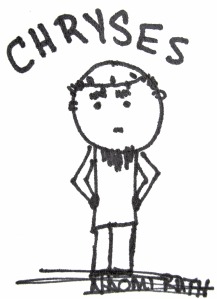
Chryses, a priest of Apollo whose daughter is stolen away, but Apollo has his back. According to some dude named Eustathius he was the brother of Briseus. He also knew Orestes, but that’s not important for The Iliad.
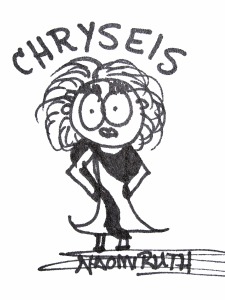
Chryseis, island babe, daughter of Chryses, also know as Astynome. Stolen by Agamemnon, but given back to her father and disappears from the story pretty quickly. She is bitter about this, however, she shows up in Medieval literature later, under the name Cressida, so she shouldn’t be that upset.
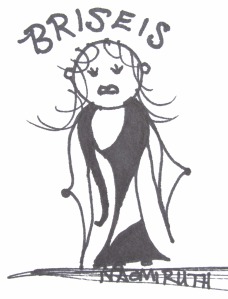
Briseis, also know as Hippodameia, a war prize for Achilles, princess of Lyrnessus, stolen by Agamemnon. Her father was Briseus, brother of Chryses; her husband was Mynes (was being the operative word); and she used to have three brothers. Her life is crap.
MORE THAN HUMAN

Scamander, the anthropomorphic personification of the river Scamander, also known as Skamandros Xanthos (but only the gods called him Xanthos, so it would be disrespectful for us to use that term). He finds Achilles to be more insufferable than I do. I may love him more than Diomedes, but don’t tell Diomedes I said that.

Iris, the messenger of Zeus, anthropomorphic personification of rainbows, not really on anyone’s side, has similar functions to Hermes.
THE LAST IMMORTAL
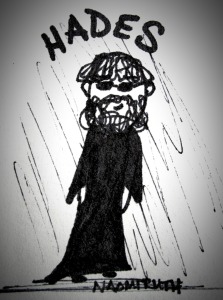
Hades, Lord of the Underworld. He’s not actually in The Iliad, HOWEVER, I am putting him in The Iliad anyway, because I love him, and he’s fabulous.
And there you have it, the final characters. Some other people may show up, like Sarpedon, Ganymede, Thaos — but don’t worry about them. I’ll explain who they are as they appear.
In the next couple of posts I will give you some background information on the author, Homer, and the text. Because they are shorter I’ll be posting the series of Informational Posts on Monday/Wednesday/and Friday of this coming week (which hopefully I will not regret, because More Work). There will be fewer pictures, but it will make everything make so much more sense later. I will do my best to make it as insufferable as possible… er… un-sufferable? I will hope to make you not suffer very muchly. Something like that. Okaybye!
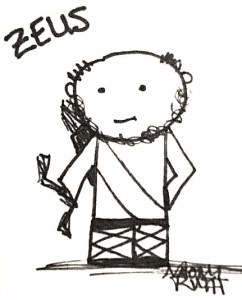 Zeus, king of the gods, husband of Hera, brother to Poseidon and Hades, lover of many, more concerned with people learning lessons than taking sides, although people consider him on the Trojan side, because Thetis.
 Hera, queen of the gods, Zeus’ wife, allied with Athena, on the side of the Argives.
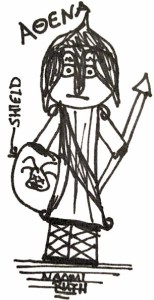 Athena, daughter of Zeus (popped out of his head one day), allied with Hera, on the side of the Argives, all about war and wisdom.
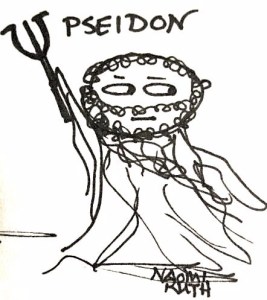 Poseidon, brother of Zeus and Hades, helped the Trojans build their city but they never re-paid him, therefore, on the side of the Argives. Also, Argives are big ship people and, therefore, give him proper sacrifice and attention, since he’s in charge of the sea and earthquakes and such.
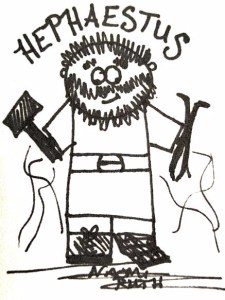 Hephaestus, husband to Aphrodite, lame, god of metalsmithing, makes Achilles armour and rescues him from Scamander, so kind of on the Argives’ side?
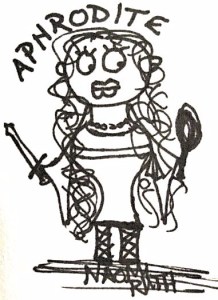 Aphrodite, daughter of Zeus, mother of Aeneas so, therefore, on the side of the Trojans. She’s all about love and war and comes off much more a wimp than she actually is.
 Apollo, son of Zeus, twin brother to Artemis, gods of music and the sun, on the side of the Trojans.
 Artemis, daughter of Zeus, twin sister to Apollo, goddess of the hunt and people like slaves and outcasts, on the Trojan side, just like her brother.
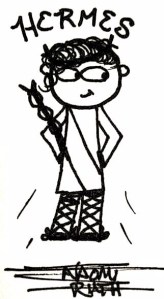 Hermes, messenger of the gods, kind of hilarious, I love him. Sort of on the Argives side, but helps the Trojans as well.
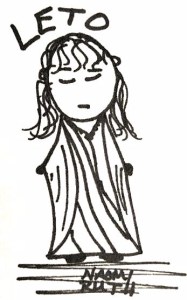 Leto, daughter of Titans, mother of Apollo and Artemis, sort of on the Trojan side.
 Thetis, sea-nymph, mother of Achilles, calls in a favour from Zeus to try and convince him to side with the Argives. Not sure this really did her son any good, tbh.
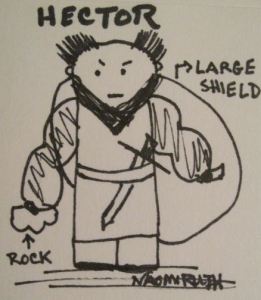 Hector, son of Priam, The Mightiest Warrior, husband to Andromache, father of Astyanax, actually has a brain and uses it too.
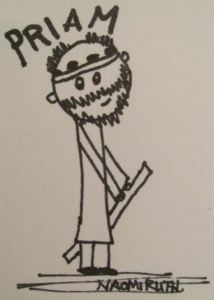 Priam, king of Troy, husband to Hecuba, father of Hector, Paris, Deiphobus, Cassandra, and gods know who else, kind, but not always useful.
 Paris, son of Priam, brother to Hector (etc.), stealer of Helen, xenia-breaker (more on that later), causes All of the Problems.
 Helen, ex-wife to Menelaus, lover of Paris, fairly useless as a character.
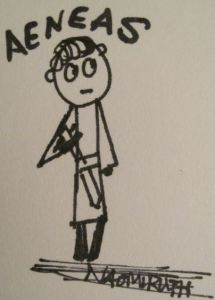 Aeneas, Trojan nobleman, son of Aphrodite, has his own epic, less whiney than Odysseus’, son of Aphrodite, supposedly founded the city of Rome… er, or begat the son who begat the son who did.
 Andromache, wife of Hector, mother of Asytanax, actually has a personality, unlike Helen.
 Hecuba, wife of Priam, Queen of Troy, shows up in one of the Greek plays later.
 Polydamas, friend to Hector, has good advice… that no one ever listens to. [And no… I don’t know what to say in response to how his character turned out.]
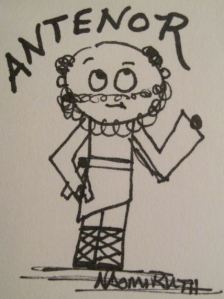 Antenor, nobleman, adviser to Priam, fathered many Trojan warriors, apparently, hates Helen.
 Agenor, son of Antenor, warrior, attempts to fight Achilles, kind of important.
 Glaucus, Lycian, ally to the Trojans, his dad knew Diomede’s dad, a bit dense.
 Dolon, spies on Greek ships, not very important.
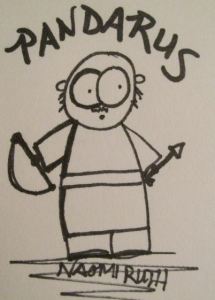 Pandarus, archer, Ruins Things.
 Deiphobus, son of Priam and Hecuba, brother to Cassandra, also gift of prophecy
 Cassandra, daughter of Priam, sister to Deiphobus, blessed with prophecy via Apollo
 Polydorus, youngest son of Priam, brother to Hector, runs fast – but not fast enough.
 Euphorbus, a fine Trojan warrior. Only moderately important.
 Achilles, son of Peleus and the sea-nymph Thetis. Momma’s boy. He cries a lot. Leader of the Myrmidons. “Best Friends” with Patroclus.
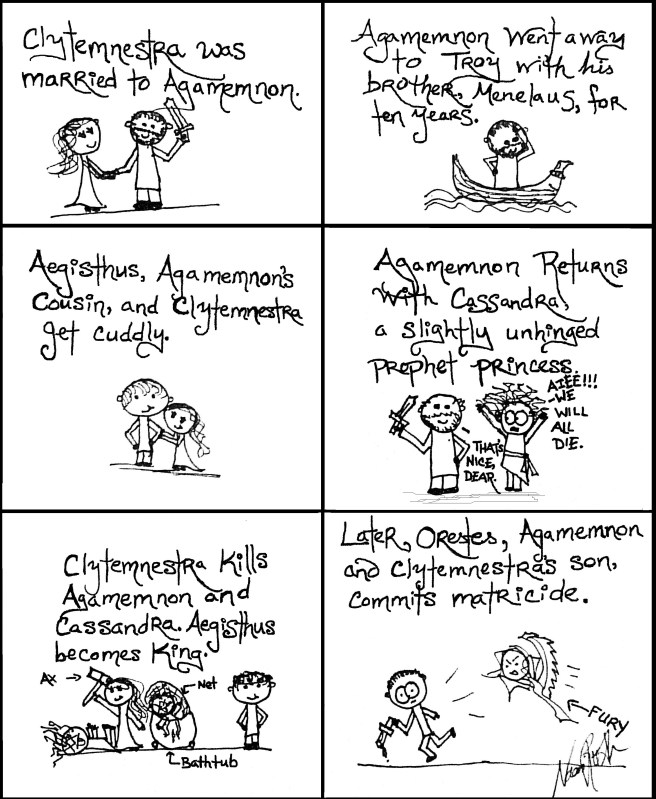
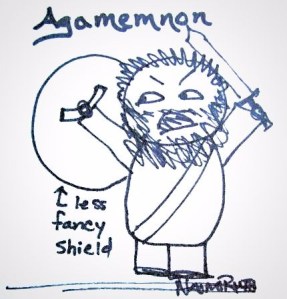 Agamemnon, a.k.a. Atrides, King of Mycenae, leader of the Achaean army, brother to Menlaus. Kind of a dick.
 Menelaus, brother to Agamemnon,

 Patroclus,
  The Great Ajax, also spelled Aias, a.k.a. Telamonian Ajax, Achaean commander, huge and strong, bff is Little Ajax, together they are known as the “Aeantes.”
 Nestor, a.k.a. Nestor the Wise, King of Pylos, oldest Achaean commander, acts as advisor to Agamemnon, a bit long-winded.
 Machaon, a healer, not very important, shows up in Book XI. [He’s just chillin’, looking at the stars, waiting patiently]
 Calchas, a soothsayer, mildly important, at least in Book I.
 Phoenix, a kind old warrior, helped raise Achilles, but we can’t blame him for how Achilles turned out.
 Idomeneus, King of Crete, not very important.

 Only Slightly Deranged